Our expertise · The complete guide
Embroidery, screen printing, transfer, digital printing, laser engraving, embossing… Every material and every logo deserves the right process. Here is how we choose — and why.
Choosing well
Four questions usually point the way: the material, the expected lifespan, the complexity of the artwork and the quantity. Here are the main directions — we then fine-tune with you.
Repeated washing, intensive use, worksite life: favour what is stitched, engraved or fired into the material.
→ Embroidery · Laser engraving · FiringHigh volumes, solid colours, controlled unit cost: frame-based techniques remain unbeatable.
→ Screen printing · Flex transferGradients, full colour, small details: digital printing reproduces what thread and frame cannot.
→ DTF · DTG · UV digitalHigh-end corporate gifts, strong brand image: play with material, relief and rare finishes.
→ 3D embroidery · Embossing · Foil stampingFamily 01
Thread stitched into the material: the most durable and premium textile finish. A palette of over 150 thread colours — and eleven different ways of working relief, texture and shape.
The premium standard: a flat-stitched logo, crisp and resistant to wear and repeated washing.
Best for: polos, caps, workwear, bags Note: no gradients or photos — the logo is adapted into solid areas.Foam placed under the stitches creates a bold, highly visible relief — the signature of streetwear and caps.
Best for: caps, solid, bold logos Note: for simple designs only, without fine details.Digital multicolour embroidery: gradients and colour transitions without changing thread.
Best for: multicolour logos, gradients Note: a more complex process than standard embroidery.Textured stitches with character: the same logo, but with a different feel and play of light.
Best for: bold logos worth highlighting Note: not suited to very fine details.A high thread density creates a soft, even relief without foam — sophisticated and durable.
Best for: sweatshirts, statement pieces Note: may weigh down light fabrics.Threads are cut after stitching: a fringed effect, a textured surface unlike any other.
Best for: large areas, simple designs Note: faster wear under intensive use.Sequins stitched directly onto the fabric: maximum shine and visibility, guaranteed event effect.
Best for: events, stage textiles Note: harsh washing not recommended.Line only, no fill: light, minimalist, elegant.
Best for: linear logos, clean aesthetics Note: loses impact at small sizes.Embroidery and laser cutting combined: patches in fully custom shapes, with a precise finish.
Best for: free-form patches Note: two combined processes — slightly longer lead times.The logo is embroidered separately then sewn onto the product: consistent from piece to piece, very versatile.
Best for: caps, workwear, collections Note: adds slight thickness.The removable version of the embroidered patch: attached and removed in one gesture, mission by mission.
Best for: security, rescue, modular outfits Note: limited to the patch area.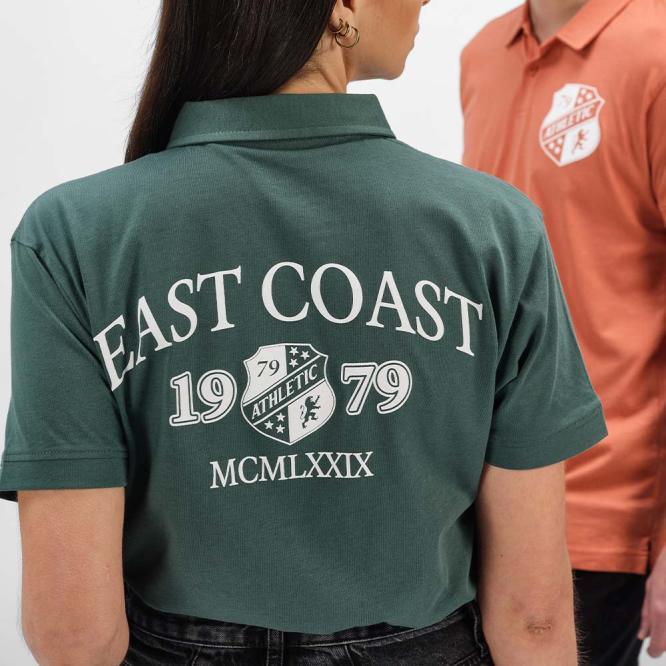
Family 02
Ink applied through a frame, colour by colour: vivid tones, excellent coverage and unbeatable unit cost as soon as the run grows. The reference for large volumes.
Frame printing directly onto fabric: bold colours, great consistency between pieces, remarkable durability.
Best for: t-shirts, tote bags, large runs Note: no gradients or photos; setup less suited to very small runs.The same frame precision on rigid, flat surfaces: wood, cork, paper, cardboard, metal, plastic.
Best for: coasters, notebooks, lunch boxes Note: one plate per colour — simple logos recommended.A rotary system follows cylindrical surfaces: the logo hugs the curve of the object, without distortion.
Best for: bottles, glasses, thermos flasks Note: one colour per pass.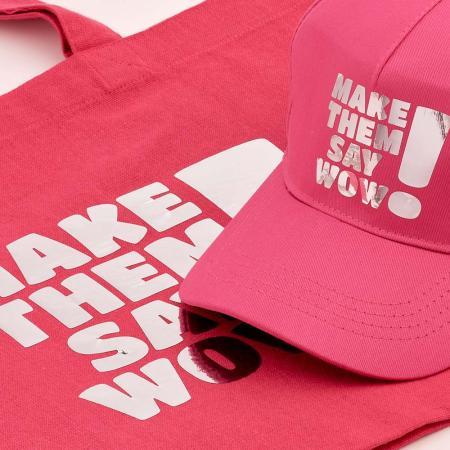
Family 03
The artwork is prepared on a film, then transferred onto the textile with heat and pressure. A very versatile family: from the detailed full-colour DTF to the special finishes of flex — glitter, neon, velvet, holographic.
Direct to Film: vibrant full colour and fine details on almost any textile, including dark backgrounds.
Best for: small runs, detailed artwork Note: slightly perceptible touch on large areas.Cut vinyl pressed on with heat: a clean, even and durable finish for solid-colour designs.
Best for: names, numbers, simple logos Note: no gradients or very fine details.Flex in its creative version: glitter, neon, velvet, mirror or holographic effect — over 80 finishes to choose from.
Best for: differentiation, events, fashion Note: the effect is that of the film — solid colours only.A thick, brick-style relief that gives the logo a very assertive three-dimensional volume.
Best for: hoodies, caps, streetwear Note: bold, simple designs only.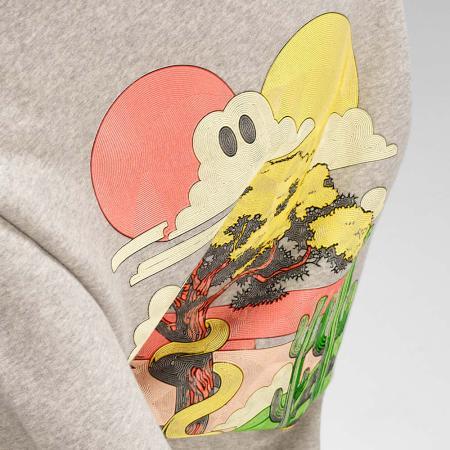
Family 04
Ink is applied directly onto the fabric, without film or frame: photos, gradients and details with no colour limit, and a soft touch. The technique for complex artwork, from small runs upwards.
Direct full-colour printing on cotton: photographic quality, natural feel, no minimum colour count.
Best for: cotton t-shirts, complex artwork Note: less effective on polyester; adapted washing care.DTG full colour enhanced with a printed relief: the artwork gains volume and texture.
Best for: light textiles, logos that stand out Note: relief on a white base — recommended on light products.Material deposit creates real volume on the fabric (up to 5 mm): unique depth and texture effects.
Best for: structured logos, premium pieces Note: simple, well-structured designs recommended.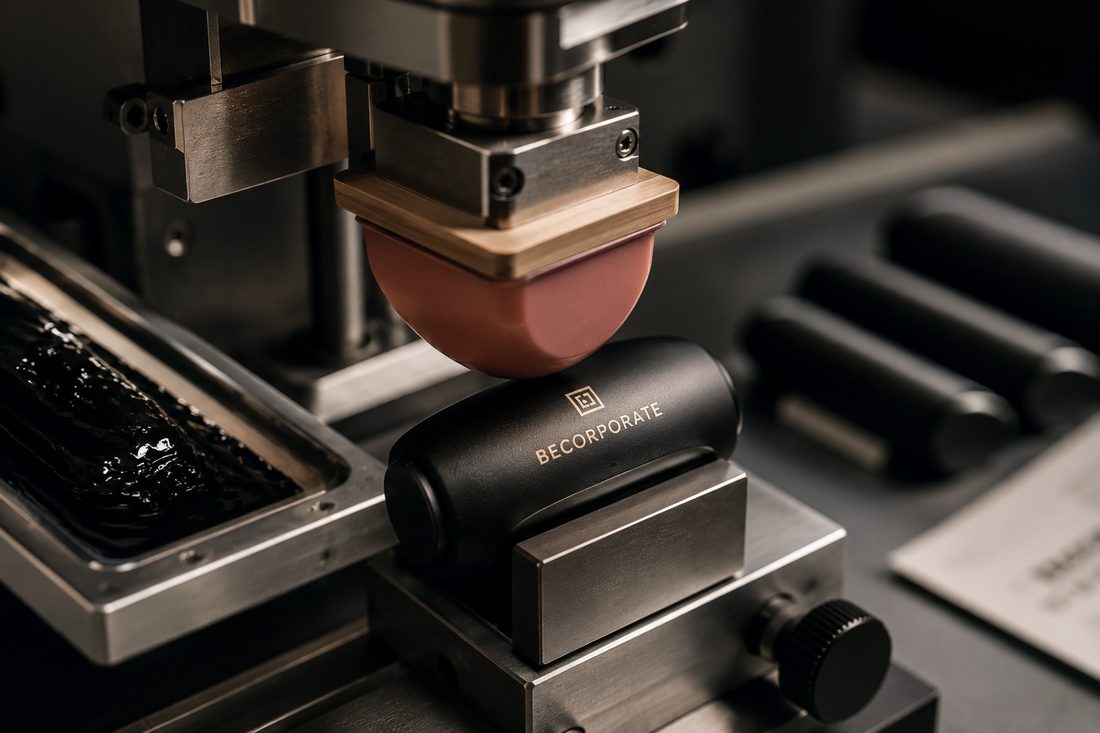
Family 05
Pens, bottles, power banks, tableware: objects have their own rules — curved surfaces, hard materials, small areas. Five processes cover the essentials of the object catalogue.
A soft pad deposits ink on curved, irregular or tiny surfaces — the Swiss army knife of promotional objects.
Best for: pens, cables, small objects Note: small print areas, limited colours.Full-colour ink cured instantly with UV light, directly on the rigid surface: high definition and a fast process.
Best for: notebooks, power banks, boxes Note: flat or slightly curved surfaces.The rotary version of UV: the artwork prints continuously around cylindrical objects, without a seam.
Best for: bottles, tumblers, mugs Note: regular cylinders only.The full-colour artwork is printed on film then applied to the object: flexible, no direct printing, perfect for small quantities.
Best for: small runs of varied objects Note: avoid very small characters and rough surfaces.Ceramic decals fired at over 600 °C: the design is vitrified into the material — indestructible in daily use.
Best for: cups, bowls, heavy-use tableware Note: ceramic and glass only; colour nuances after firing.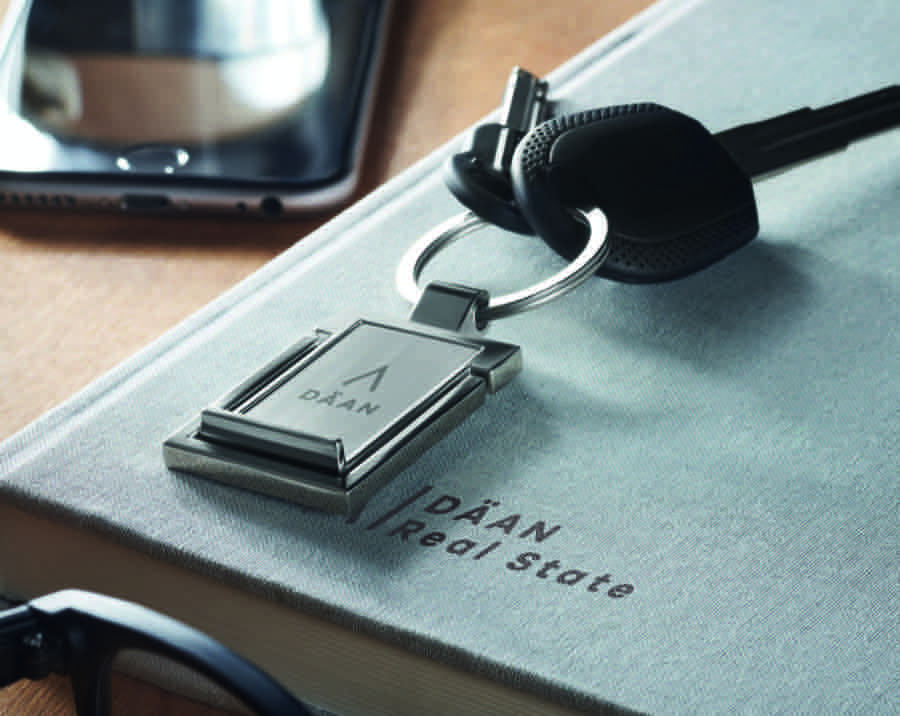
Family 06
The laser beam marks the material itself, without ink: a permanent, precise and elegant result that reveals the material — metal, wood, glass, cork or leather.
Unalterable engraved marking on flat surfaces: extreme precision and very high-end sobriety.
Best for: metal, wood, glass, cork Note: monochrome result, shade depends on the material.The engraving follows cylindrical surfaces: a continuous design around bottles, thermos flasks and pens.
Best for: insulated bottles, metal pens Note: regular cylinders only.A controlled burn draws the design into the fabric, without ink: subtle, tone on tone, the feel is preserved.
Best for: tote bags, backpacks, quiet chic Note: contrast depends on the fabric; thick lines recommended.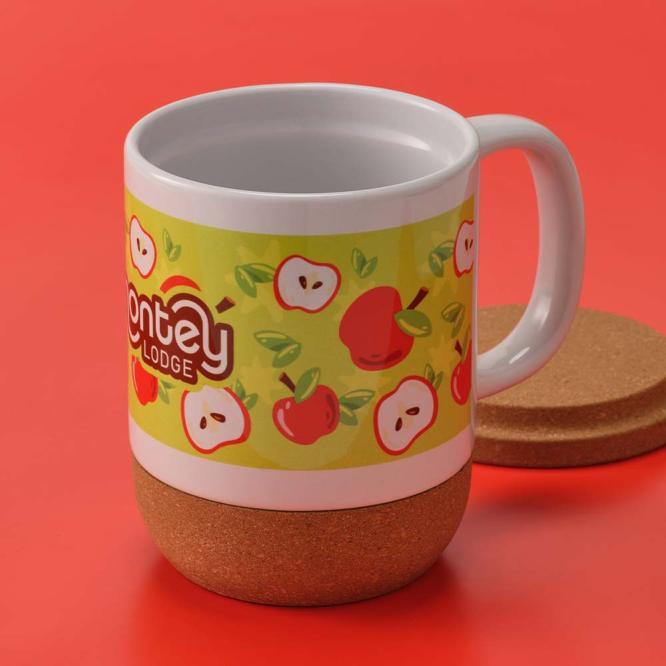
Family 07
The ink chemically penetrates the substrate: the colour becomes one with the material, with no relief or texture. Indelible — it does not flake or crack.
Total full colour integrated into the material: the artwork becomes the product, with excellent durability.
Best for: mugs, bottles, polyester, all-over Note: light-coloured, pre-treated substrates only.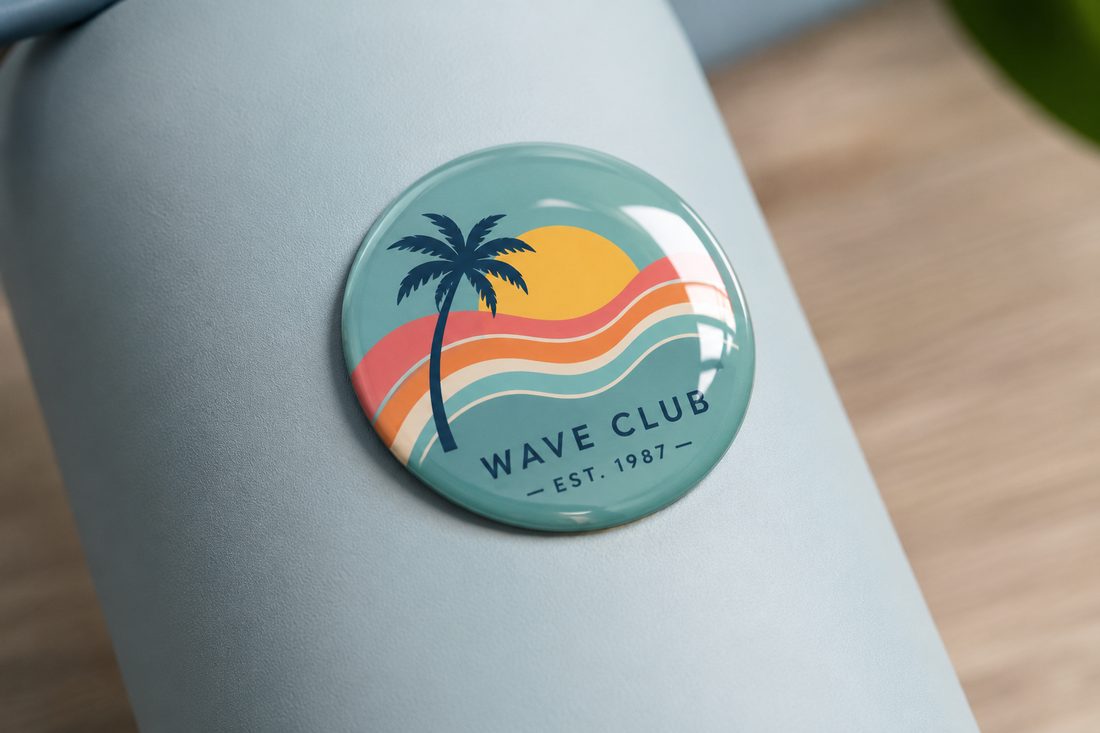
Family 08
A drop of transparent resin domes the artwork: magnifying effect, shine, protection. The logo gains relief and catches the light.
Full-colour print covered with domed resin: a glossy 3D finish that durably protects the artwork.
Best for: badges, key rings, premium stickers Note: sensitive to hard knocks and high heat.The same magnifying effect applied to textile: a full-colour resin emblem with strong relief and high definition.
Best for: caps, polos, aprons Note: favour compact shapes; avoid prolonged UV exposure.
Family 09
Embossed relief, hot foil, rhinestones: the finishes that take a product from personalised to signed. The territory of high-end corporate gifts and limited editions.
A heated metal die presses the logo into the material: understated, tactile, definitively elegant.
Best for: leather, cork, notebooks, gift boxes Note: no colour — the effect comes from the relief; prior tests depending on material.Hot stamping enhanced with a metallic or pigmented foil: gold, silver, copper… the instant luxury effect.
Best for: stationery, leather, packaging Note: limited to available foil shades.Heat, pressure and padding sculpt a pronounced relief into the textile, with no added colour.
Best for: sweatshirts, tote bags, tone on tone Note: dedicated die — relevant from sufficient run sizes.Embossed relief meets transfer colour: depth and artwork in a single gesture.
Best for: signature textile pieces Note: limited colour fidelity on the relief.A mould deposits a polymer in high relief: real volume, consistent finish, full colour possible.
Best for: caps, technical textiles Note: simple, structured designs recommended.Decorative stones applied one by one: maximum sparkle and assertive differentiation.
Best for: events, stage textiles Note: simple designs; sensitive to intensive washing.Making it last
The final quality depends on the technique — but also on the file provided and how the product is cared for. Three simple habits.
FAQ
Send us your logo and your idea: we will get back to you within 24–48 h with the recommended technique, the right product and a proof before production.
Ask for advice